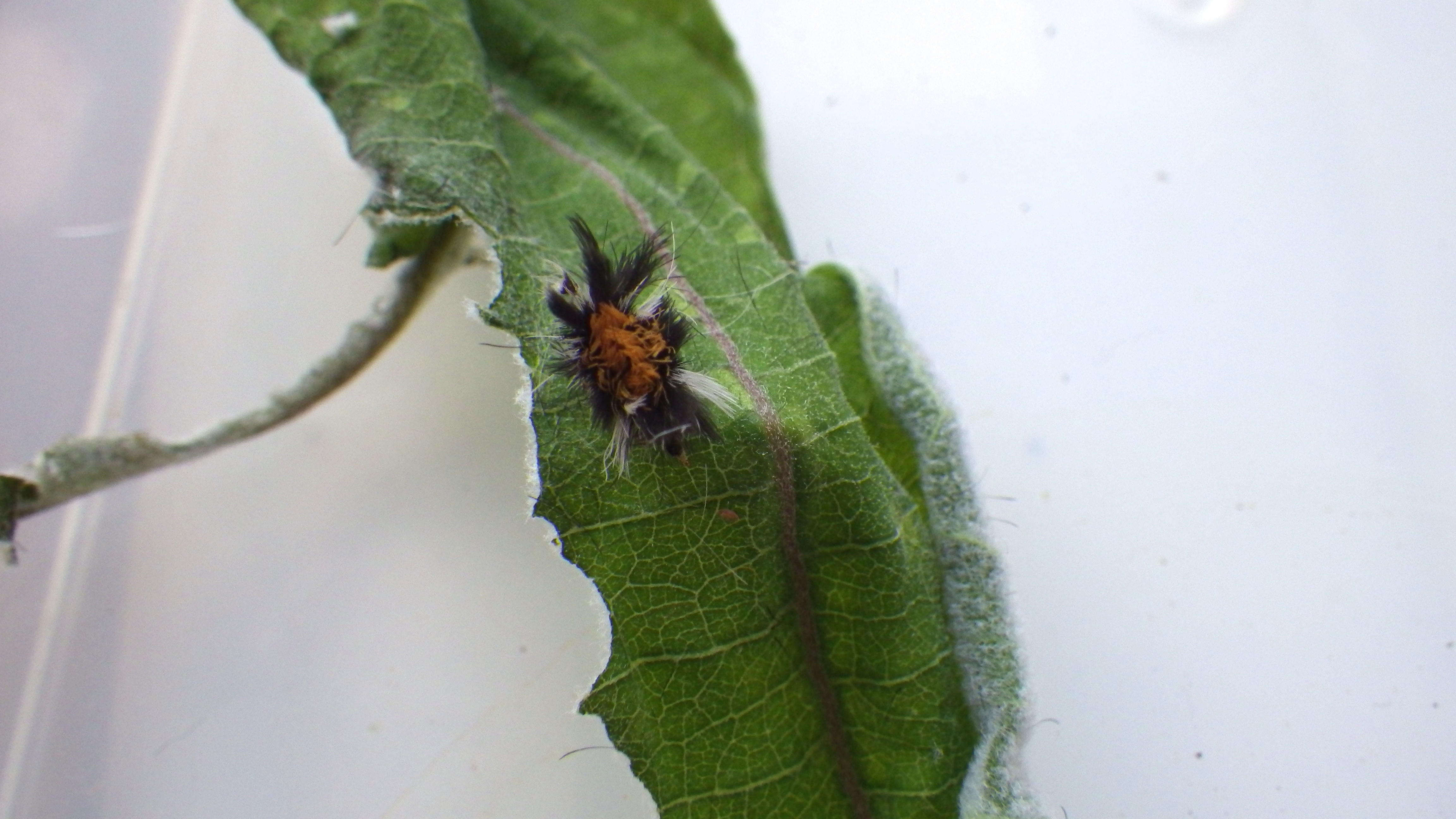
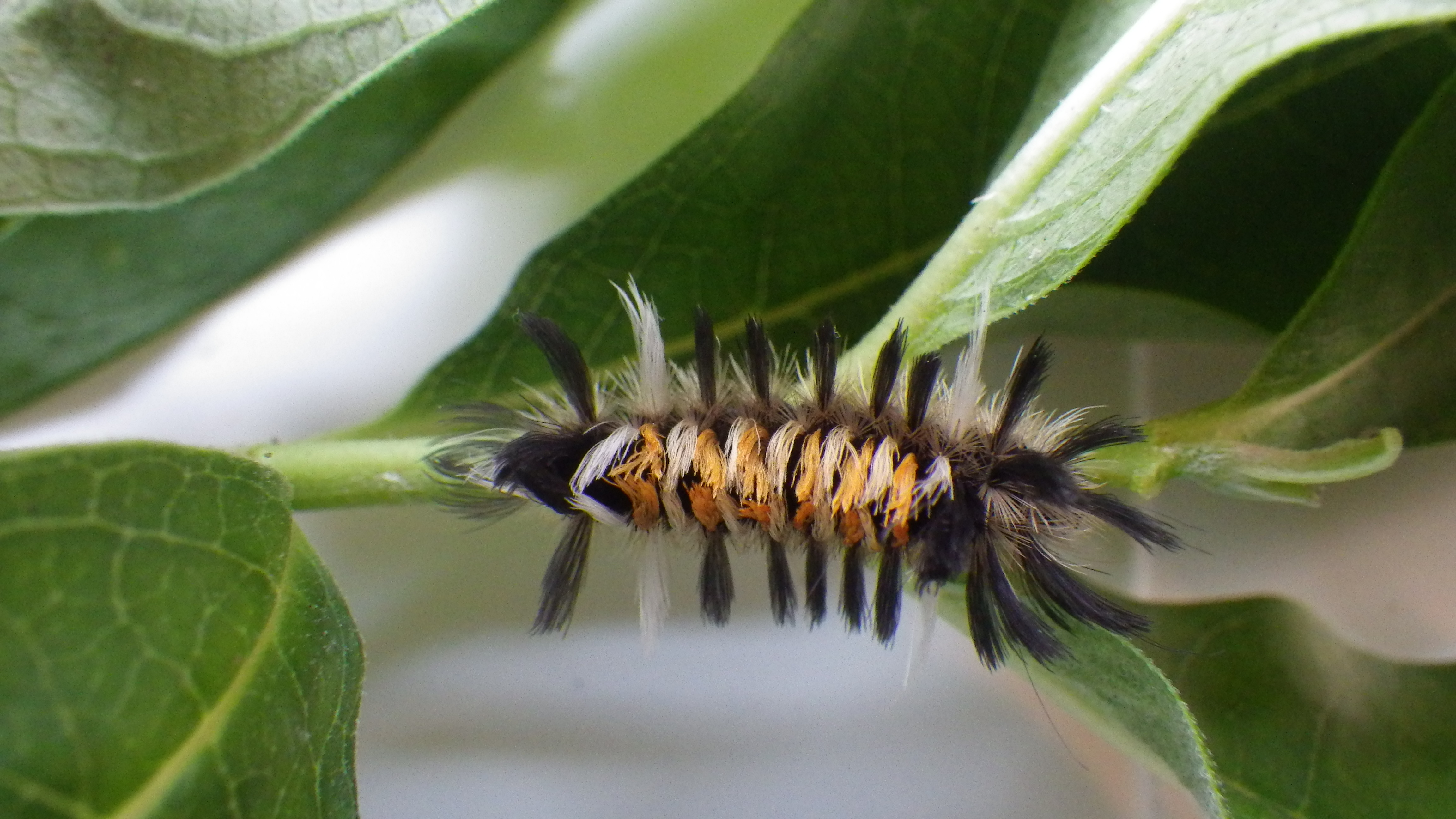
This a.m. Tucker looked like it expired and felt very sad. When I removed the leaf and ready to dispose of it, I noticed another yet bigger caterpillar hiding on the next leaf. Monarchs molt entirely different and wasn’t expecting Tucker’s molted body with its fuzzy hairs still in tack. Happy and content that Tucker may complete its cycle after all and will, of course, go thru many more molting stages.
When my granddaughters visited, they noticed I had something strange quickly moving about in my Monarch Butterfly House. They stopped me from destroying it and MJ said it was a Tussock Moth Caterpillar, that also feeds on the milkweed plant. It got transplanted to another container so its activities could be watched! So, I named it “Tucker”.
Tucker is looking mightily fine with its colorful fuzzy garment! It has doubled in size and when introduced to more fresh milkweed leaves, Tucker settled in chopping down with a whooping appetite. Its going to be interesting to watch its development.